
What Informs Development of the Konza Technopolis?
As a result of the opportunities created by digital advancement, technocrats envisaged how knowledge-based industries could be created to broaden economic boundaries and challenges of urban growth. In 2009, the Kenyan Government hired the International Finance Corporation to advise the viability of initiating a techno-city in Konza, located 60km South-East of Nairobi: https://dokumen.tips/download/link/konza-local-physical-development-plan-2012-2030. Towards this end, feasibility studies were commissioned to demonstrate its viability and the potential contribution to local economic development. The initial feasibility and concept master plan was prepared by Deloitte and Pell Frischmann, a United Kingdom based consultancy.
In 2012, the ICT ministry retained a few of the initial consultants to prepare a detailed business plan & master plan of phase one. The Master Development Partner1 (MDP1) team included SHoP Architects, Dalberg, Centre for Urban and Regional Planning, OZ Architecture, and Tetra Tech. The MDP team held extensive interviews with stakeholders, business leaders, potential investors and led 5 workshops with Government officials over nearly a year to develop a comprehensive plan for the city. In 2013, the late President Mwai Kibaki commissioned its development and set up the board of KotDA. Physical infrastructure and parcel development started in 2014 while horizontal infrastructure was started in 2015. (By the year 2022, 70% of space in Phase 1 had been snapped up by both local and international investors).
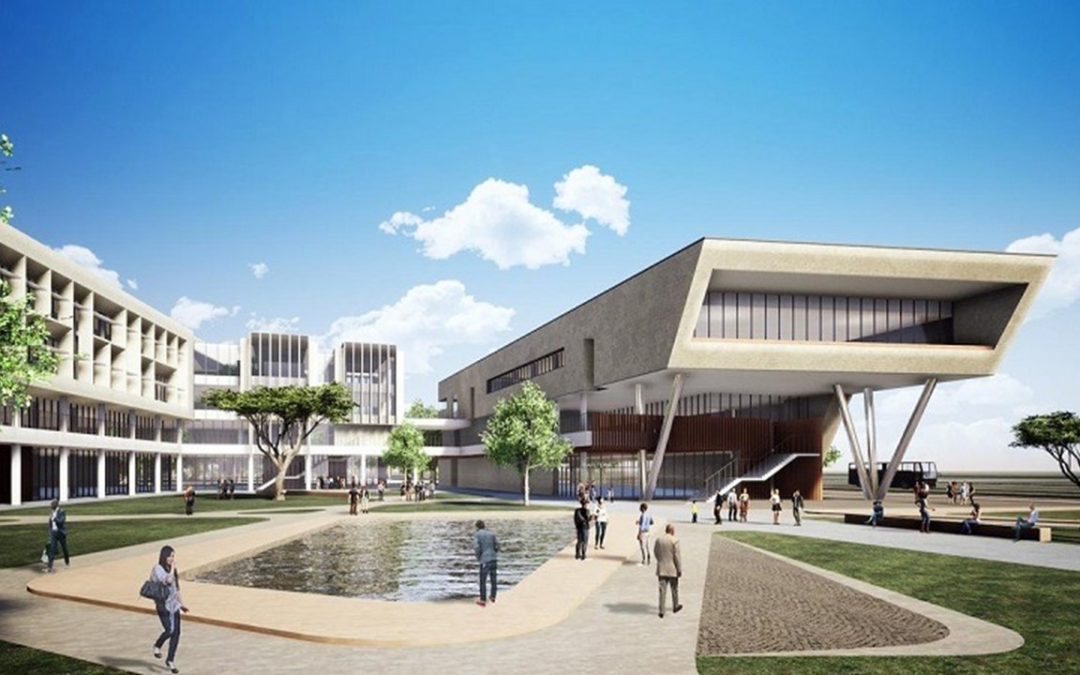
Konza’s development is planned in three phases, running through 20 years at an estimated cost of USD 1.45B. Very few cities have resources to finance costs of such magnitudes. As such, Public–Private partnership models are best placed to carry out such initiatives. Typically, it involves private capital financing government projects and then drawing revenues from users over the course of the PPP contract. Public–Private partnerships have been implemented in multiple countries primarily for infrastructure projects.
Konza Technopolis remains a PPP in which the Kenyan Government has a minimal role of developing the public infrastructure and regulatory guidelines. Partnership with the private sector is not only necessary to share the costs but is also needed to share the risks and technical capacities. Konza must deploy a combination of internal and external funding, policy & regulatory tools plus strategic partnerships with the private sector among other strategies for financing its urban vision.
Finally, political leadership may just be the most crucial factor in the implementation phase. The longitudinal test of political leadership is whether the Konza vision can be sustained throughout our country’s political and economic cycles.

I love your insightful blogs. Keep educating us on what the future will look like in days to come